
Shieldhall Cruise July 26
Published 16:38 on 23 Jul 2026
Excursion aboard the SS Shieldhall 20 July 2026
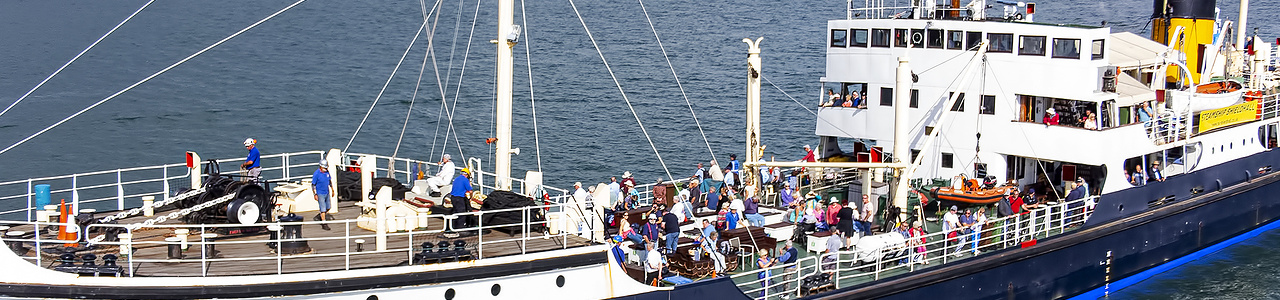
What do you get when you mix the largest working steamship in Britain, a boatload of enthusiastic volunteers, a beautiful sunny day, a flypast by a Coastguard helicopter, a close-up view of four very large cruise ships leaving Southampton, a chorus of sea shanty singers, The Steam Town Shanty Crew, a commentary on the history of Southampton and the Docks, and the sights and sounds of Southampton Water and the Solent? Not forgetting a cream tea if you want it!
You get an absolute gem of a day out on the Solent aboard the SS Shieldhall!
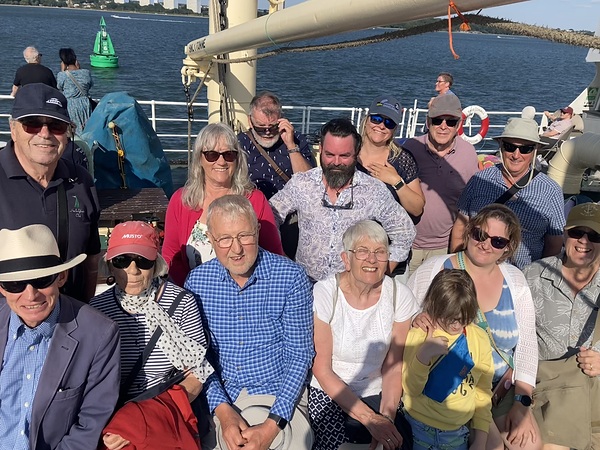
That is what occurred when 15 members of the Haslar Yacht Club joined a recent heritage cruise on the SS Shieldhall —part concert and part mechanical wonderland.
History of Steamship Shieldhall
Launched for service in Glasgow in July 1955, SS Shieldhall was originally used to transport sewage sludge as well as providing an opportunity for disadvantaged families and disabled ex-service people to enjoy a free excursion.
Modified in 1977 by Southern Water, Shieldhall then transported sludge from Millbrook, Marchwood and Woolston to the 'dumping grounds' to the east of the Isle of Wight. After being decommissioned in 1985, the vessel was purchased by a Southampton preservation society where she was lovingly restored to the majestic ship visitors can enjoy today.
Engineering
The SS Shieldhall serves as a living museum of 1950s marine engineering. A unique aspect of the vessel is its "open bridge and engine room" policy allowing visitors onto the bridge where we could talk to the Captain, Donald, and down into the impressive engine room with its original steam engines at work where the temperature can reach more than 110 degrees Fahrenheit.
For those who are interested in these things, the ship is powered by two Scotch marine boilers delivering steam to twin triple-expansion engines. This maximizes efficiency by passing steam through three progressive cylinders (High, Medium, and Low pressure) to extract maximum energy before condensation.
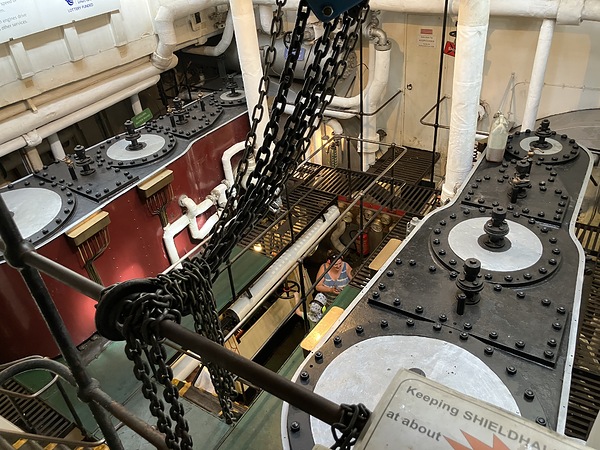
Observing the exposed moving parts of the ship offered a rare look at heavy mechanical engineering that is completely enclosed on modern ships.
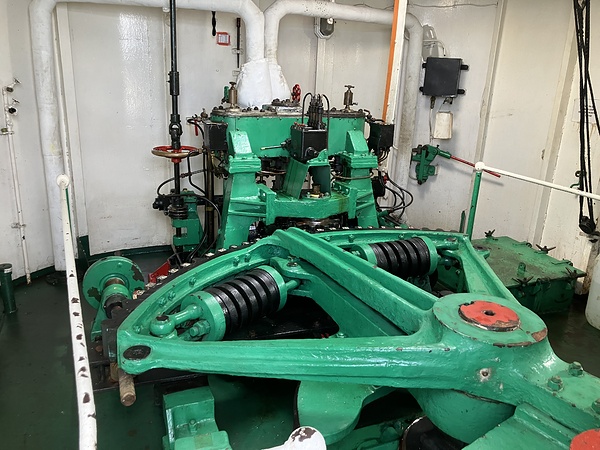
What about this for a "Tiller". Controlled from the bridge by hydraulics, the movement is driven by a small steam engine at the back.
The boilers are oil fired and we learnt that to get the ship ready to go, the crew must start heating the 25 tons of water in each of the two boilers 3 days before they can depart. You might expect to see a trail of black smoke from a steamship, but in fact the crew manage the fuel and air mixtures so that they maintain steam pressure without producing excessive stack smoke. They have a monitor in the engine room so they can see the stack and if they see black smoke they know the mix of fuel and air needs adjusting!
Final Thoughts
Between the sea shanties ringing out across the water and the warmth radiating up from the boiler room, the trip felt like stepping straight into a time machine. The volunteers who run the Shieldhall do an amazing job keeping this giant piece of history alive. And as we left the ship the Captain, Donald, who had transported us safely there and back was at the bottom of the gangway to shake the hand of every single passenger. If you ever get the chance to catch one of their special event cruises, absolutely book a ticket!
Thanks
We must as always say thank you to Jem for organising the trip and keeping us all so well informed about the arrangements. It was a lovely day out. Thank you Jem.
Anne Sword-Daniels
Photos from the trip are available in the gallery.
Last updated 08:39 on 20 September 2026